Where Nature and Heritage Converge
For thousands of years, the Metolius basin has been home to Native peoples, particularly the Wasco, Warm Springs, and Northern Paiute. The name “Metolius” itself comes from a Sahaptin (Warm Springs tribe) word meaning “white salmon,” referring to a light-colored Chinook salmon once common in the river. To these communities, the river was not just a resource but a sacred place. Unlike most rivers, the Metolius does not begin as a trickle in alpine snowmelt. It emerges suddenly and powerfully from underground springs at the base of Black Butte, a full river at birth. Its flow is remarkably constant in both volume and temperature, hovering around 48°F year-round, a stability that has shaped everything living along its banks. It provided fishing grounds rich in salmon, trout, and whitefish as well as a seasonal hunting area for deer, elk, and smaller game.
Roots, berries, and native plants such as Oregon grape roots, yarrow, arrowleaf balsamroot were gathered for food and medicine. The river functioned as a seasonal lifeway—a place of movement, sustenance, and spiritual connection. Still today, the lower portion of the river borders the Warm Springs Reservation, maintaining a direct continuity between past and present Indigenous stewardship.
Settlers and the Birth of Camp Sherman
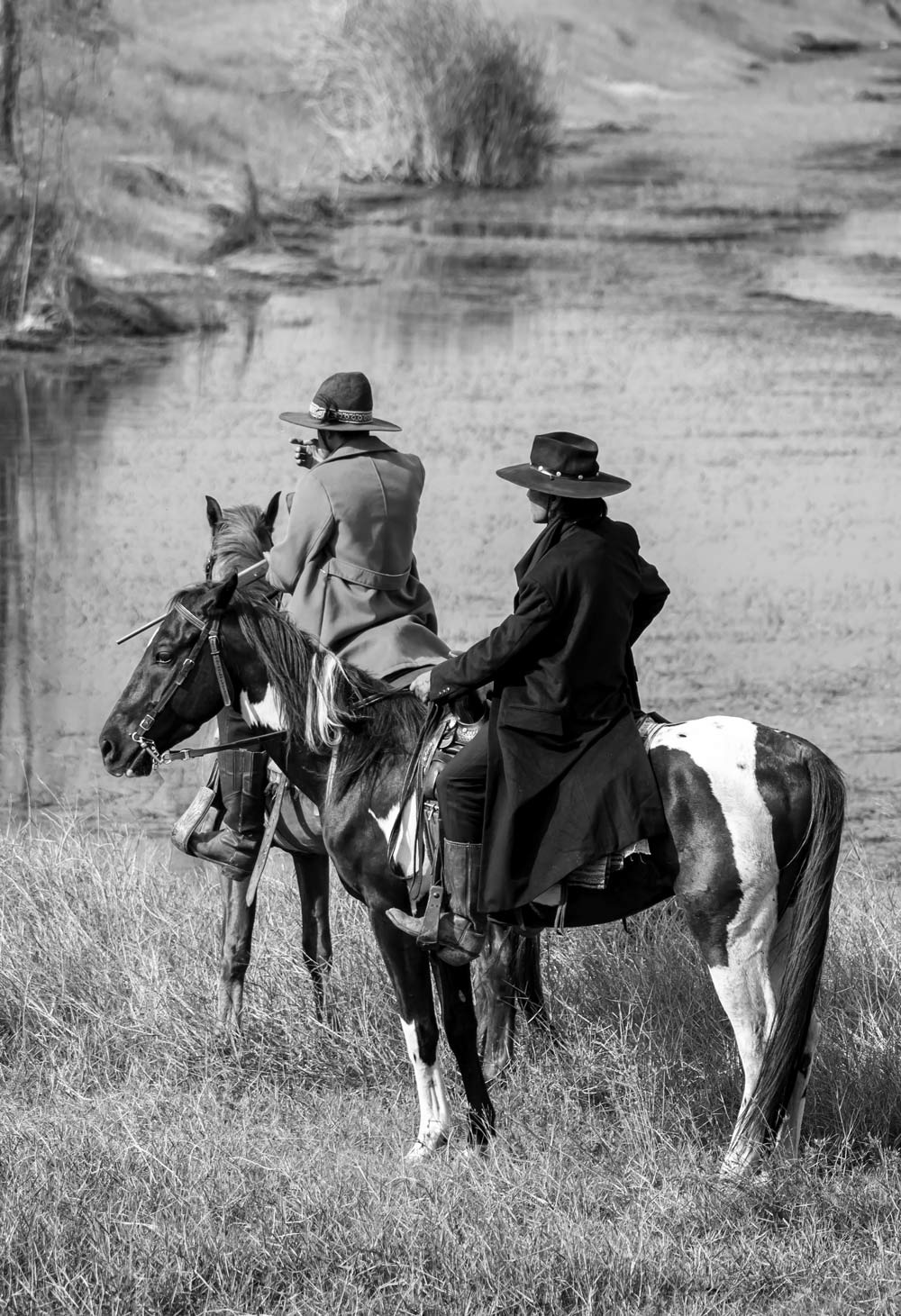
In the late 1800s, Euro-American settlers explored the area and discovered the Metolius—a place of cool shade, refreshing water, and abundant fish. They camped along the riverbanks and eventually built informal shelters that they returned to year after year. They established small farms and a school near First Creek. A few decades later, wheat farmers from Sherman County began traveling west to escape the intense summer heat of the Columbia Plateau. According to local lore, a simple sign—a shoebox lid nailed to a tree reading “Camp Sherman”—helped guide fellow travellers to the spot. The name stuck and Camp Sherman evolved from a seasonal campground into a structured community.
By 1918, the U.S. Forest Service established riverside plots for the summer cabins you see today as well as the Camp Sherman Store, post office, and schoolhouse. Inspired by the river’s beauty, early residents initiated strong protection efforts. Unlike many Western towns, Camp Sherman never industrialized. It remains intentionally small—a place defined by recreation, not extraction. In 1988, the river was designated as a National Wild and Scenic River and by 2009, the Metolius Basin became legally protected from large-scale development. These measures have preserved not just the scenery, but an entire ecological and cultural system.
Today, it is still an unincorporated community with only a few hundred year-round residents. It remains as it has been for millennia: A sacred river to Indigenous peoples, a refuge for wildlife, and summer haven for those seeking peace and quiet. Its story is not one of rapid change, but of continuity—where ancient springs still rise, fish still hold in cold currents, and people still come, generation after generation, to sit beside the same crystal clear waters.
The Metolius River Lodges
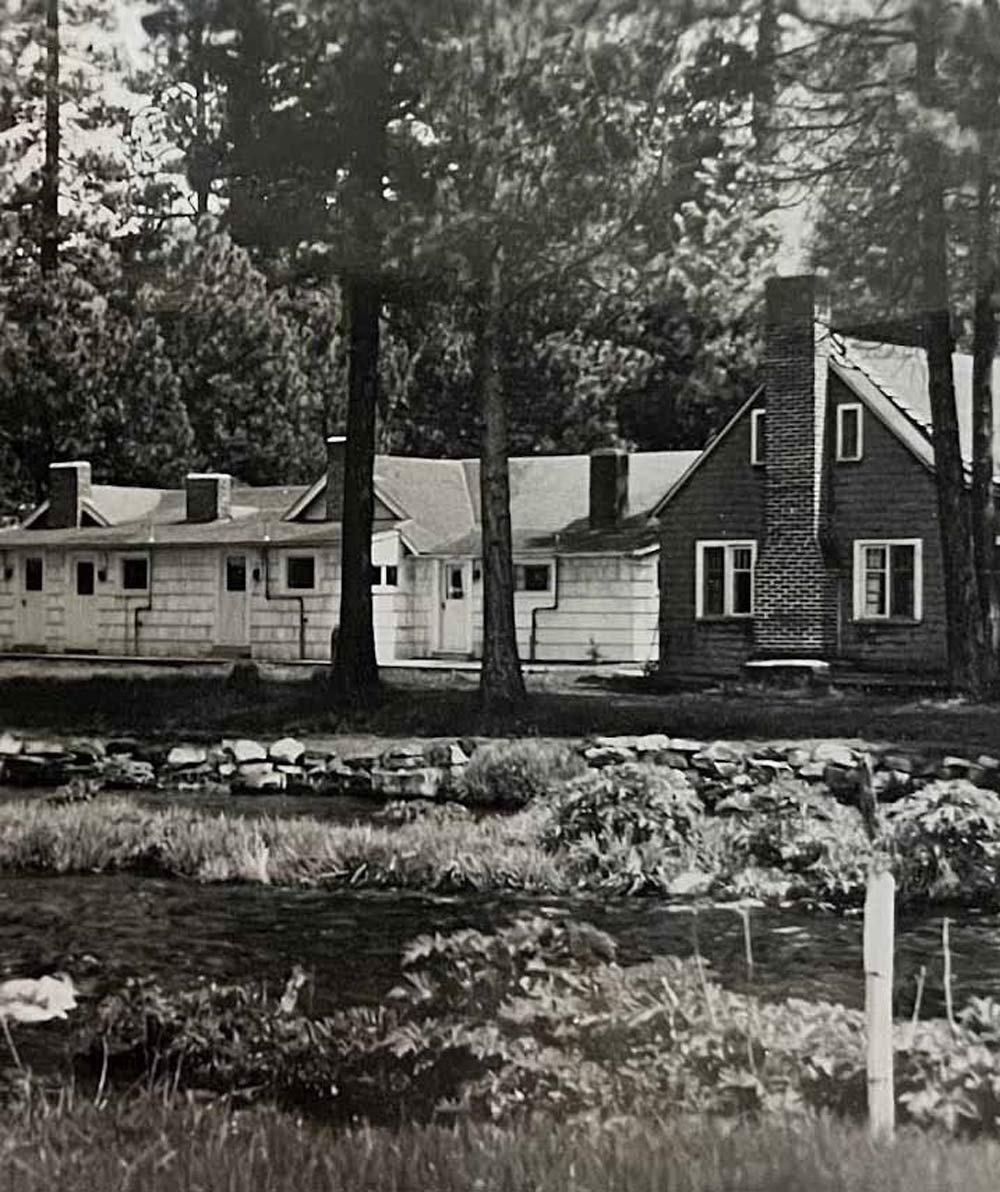
The Metolius River Lodges were the very first rental cabins built in Camp Sherman in 1918 by Owen Thompson, an unconventional resident of Camp Sherman known for riding a beautiful white horse around town. They were built before regulations prevented people from building on the river’s edge, so they are the closest cabins to the river, making the views from within many of the cabins extraordinary. Cabin 13 (Dragonfly) was built as Thompson’s personal residence. Cabins 7-10, also built by Thompson, were rented out to travellers.
In the 1940's, Clyde Rogers bought the Lodges and called it “Fish Camp” due to it being a premier location for ideal, walkable fishing spots. A decade later, Rogers sold it to the Signars who added plumbing to the cabins. A woman known in the community as “Babe” and her husband ran a cafe in what is now cabin #6 Cranefly for the Signar's. In 1963, the cafe burned to the ground from an oil furnace fire, according to the Bend Bulletin. The newspaper stated that the “flames were 70 feet high and reached the trees above”. Luckily, it rained that evening and, according to two firemen on duty, the rain was the only reason that there wasn't a major fire. No one was hurt in the fire.
The current owners